Home Platform Sectors Deployment About Contact Invest
About

Decades in the domains where being wrong is not an option

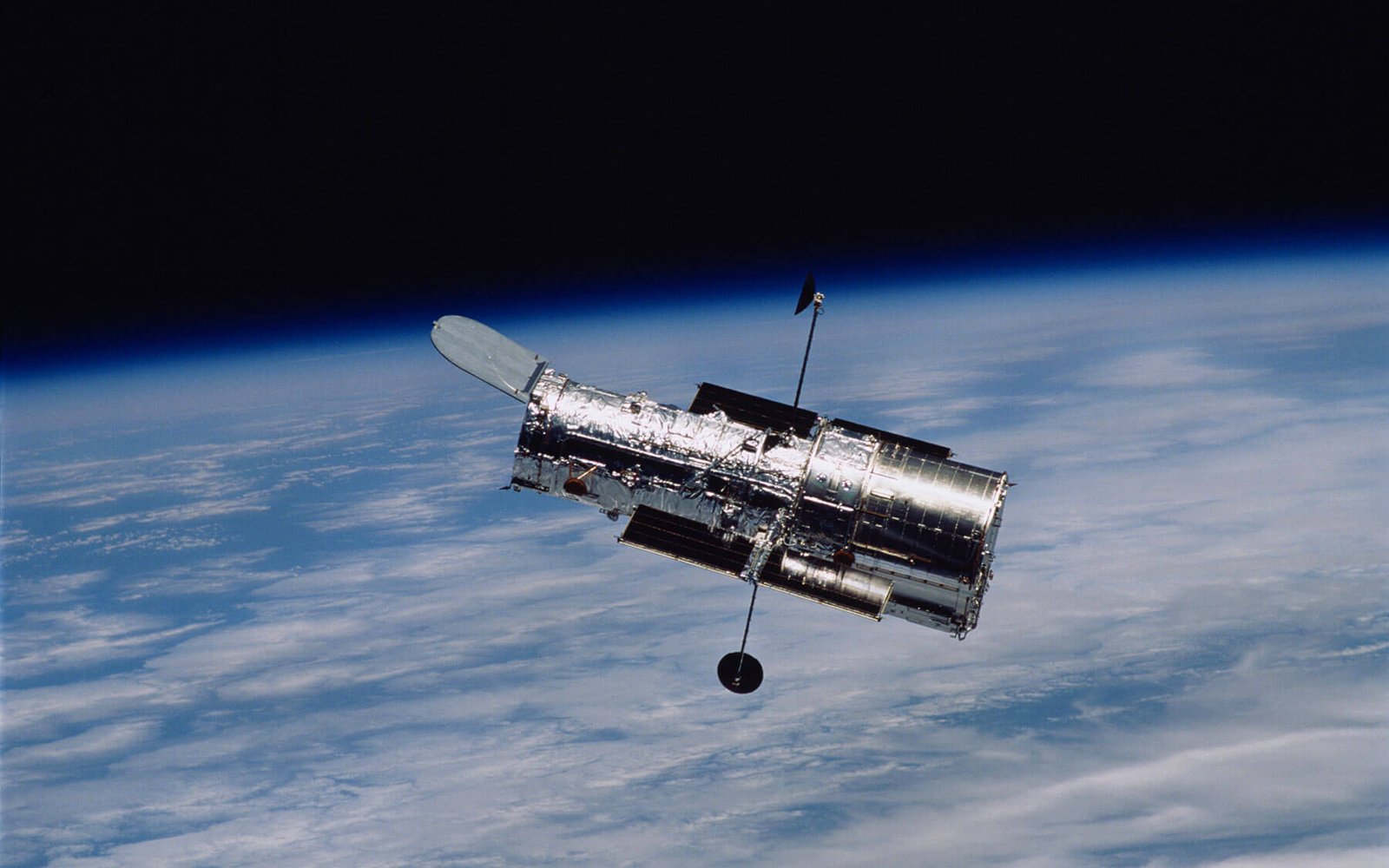
They have advised global institutions, federal agencies, and elected officials. Their space experience includes the Hubble Space Telescope, International Space Station, Space Shuttle, NASA astronaut missions, commercial launch vehicle operations, and national, military and commercial satellite operations. The team has launched and exited high-stakes technology companies. Collectively, they hold 100+ patents.

Four decades, three generations of one architecture

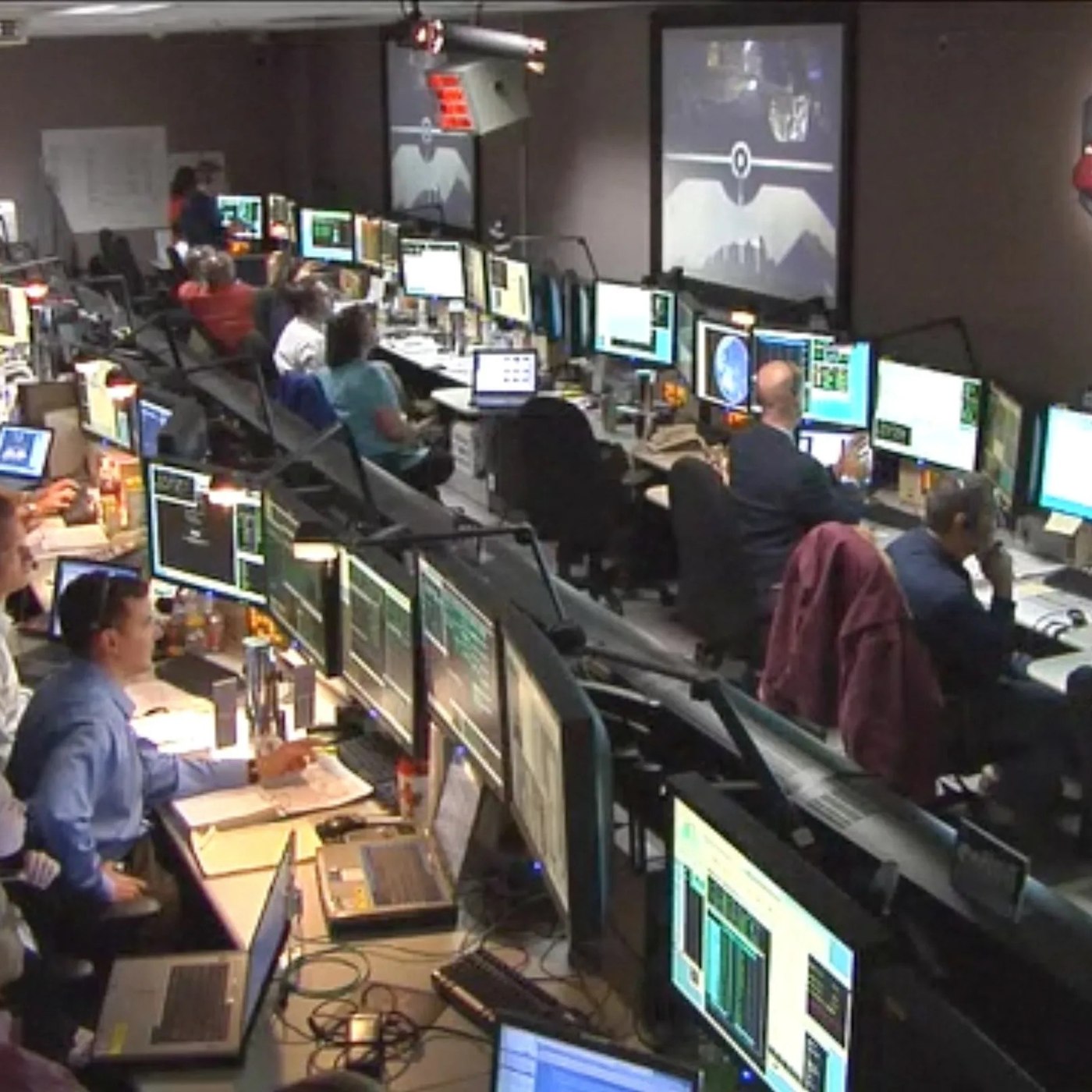
When founder Bryant Cruse walked into the Hubble Space Telescope mission control center in the mid-1980s, operators determined spacecraft status by reading screens of raw telemetry: 4,000 values, changing constantly. The first AI system for spacecraft telemetry analysis cut interpretation time from 45 minutes to under 2.

Four decades later, mission-critical control environments still largely operate the same way — human operators monitoring raw data streams, making real-time decisions under stress, with cognitive performance degrading precisely when the stakes are highest.

Sapiens is the third generation of an architecture evolved across those four decades and two acquired companies. Traditional expert systems and LLMs share the same failure: complexity grows exponentially while capability plateaus. This architecture inverts that. Capability scales while complexity stays bounded.

Annapolis office, the team, or mission operations imagery.
Company photography Annapolis office, the team, or mission operations imagery. img/feature/company.jpg

Leadership

Bryant Cruse
Headshot Bryant Cruse img/team/bryant-cruse.jpg
Bryant CruseFounder, CEO & Chairman

Bryant is a pioneer in spacecraft AI across a continuous arc from first concept to third-generation company. Conceived the first AI application for spacecraft telemetry analysis (Hubble Space Telescope) at Lockheed/NASA Goddard. Co-founded Talarian (first real-time expert system platform; acquired by TIBCO for $115M) and Altair Aerospace (acquired by Aeroflex). Founded Valkeir (first telemetry over the Internet, NASA’s Aqua). Naval Aviator. Naval Space Command. MS Space Systems Engineering, Johns Hopkins University; BA, Great Books Program, St. John’s College (Annapolis).

LinkedIn
Thomas Loveland
Headshot Thomas Loveland img/team/thomas-loveland.jpg
Thomas LovelandChief Administrative Officer

Founder and CEO of Mind Over Machines, a technology consultancy serving federal and state agencies and national brands since 1989. Inc. 5000 honoree and U.S. Chamber Small Business of the Year. Led the widely-acclaimed repeal of Maryland’s $250M computer services tax. Co-founded Maryland’s first statewide IT industry lobbying association and IT industry PAC. Early investor in and active advisor to New Sapience. Studied mathematics, University of Chicago; Great Books Program, St. John’s College (Annapolis).

LinkedIn

Board of Directors Plus Bryant Cruse and Thomas Loveland

William Bandy
Headshot William Bandy img/team/william-bandy.jpg
William BandyIndependent Director

30-year career at Defense Advanced Research Projects Agency (DARPA) and National Security Agency (NSA). Directed NSA’s Microelectronics Research Laboratory and was the first program manager of SEMATECH. Executive director of the presidential National Advisory Committee on Semiconductors. Co-founded Matrics (passive RFID), acquired by Symbol Technologies for $230M; co-founder of Symmatrics (post-quantum cybersecurity). Holds 100+ patents. PhD, Physics, University of Maryland.

LinkedIn
William Readdy
Headshot William Readdy img/team/william-readdy.jpg
William ReaddyIndependent Director

NASA astronaut with Space Shuttle missions STS-42, STS-51, STS-79. 672 hours in space. Former NASA Associate Administrator for Space Flight, leading a $7B per year enterprise of four centers and 40,000 personnel. Led the Space Shuttle’s return to flight after Columbia. Awards include NASA Distinguished Service Medal, Legion of Merit, Distinguished Flying Cross. BS, Aerospace Engineering (Honors), US Naval Academy.

LinkedIn

Frequently Asked Questions

Q1What is a world model?+
It is a model that understands the dynamics of the real world, including physics and spatial properties. It is an understanding of the world as it really exists. It can be as big or as small as needed. For example, the world model for a satellite is everything associated with that satellite. That satellite’s world model is thorough and complete, but simple and concise. No room for error.
Q2What is synthetic knowledge?+
To be clear, synthetic knowledge is not a symbolic representation of knowledge but is knowledge itself. It is derived from information, patterns, and insights generated artificially by models, rather than directly from real-world observation. It is human knowledge transformed into synthetic form.
Q3What does deterministic mean?+
It is a system, process, or philosophy where the outcome is entirely determined by initial conditions and inputs, leaving no room for randomness or chance.
Q4What does probabilistic mean?+
It is a system, process, or philosophy based on or adapted to a theory of probability. It is subject to or involves chance variation.
Q5What does hallucination mean?+
This term has been applied to large language model AI systems that provide a false, inaccurate or nonsensical response ungrounded in truth or facts.
Q6What is a high-stakes industry?+
It is a sector where the consequences of a mistake, failure, or poor decision could pose significant repercussions such as banking, healthcare, and the legal profession. Included in high-stakes industries are mission-critical systems.
Q7What does mission-critical mean?+
Mission-critical systems are vital to the functioning of a civilized society and for the public good, such as national security, finance, and energy production & distribution. Disruptions in any of these could lead to catastrophic financial, public safety or human losses.
Q8What does zero-defect mean?+
It is the concept of operations or quality management focused on preventing errors. Defects are unacceptable.
Q9What does air-gapped mean?+
A device or system that is physically isolated from outside networks: no internet, no cloud, no data centers. It is not vulnerable to external bad actors.
Q10What is an edge device?+
It is a hardware component located at the boundary of a network—close to data sources or users—that collects, processes, and analyzes data locally rather than sending it to a centralized cloud or data center.
Q11How can sapiens be audited?+
Auditing means being able to trace back how any given output or behavior was determined by the system. Both the knowledge that sapiens contain and the program that reasons about it are written and readable by humans. Knowledge that supports specific applications is certified and owned by the customer.

Talk to the people who built it

Briefings are run by the team, not by a sales function.

Request a solution