Home Platform Sectors Deployment About Contact Invest
Sustainability · Energy

We build AI for the grid.
We are not a load on it.

A sapiens runs on a single device. No data center, no training run, nothing leaving the building.

Talk to our infrastructure team
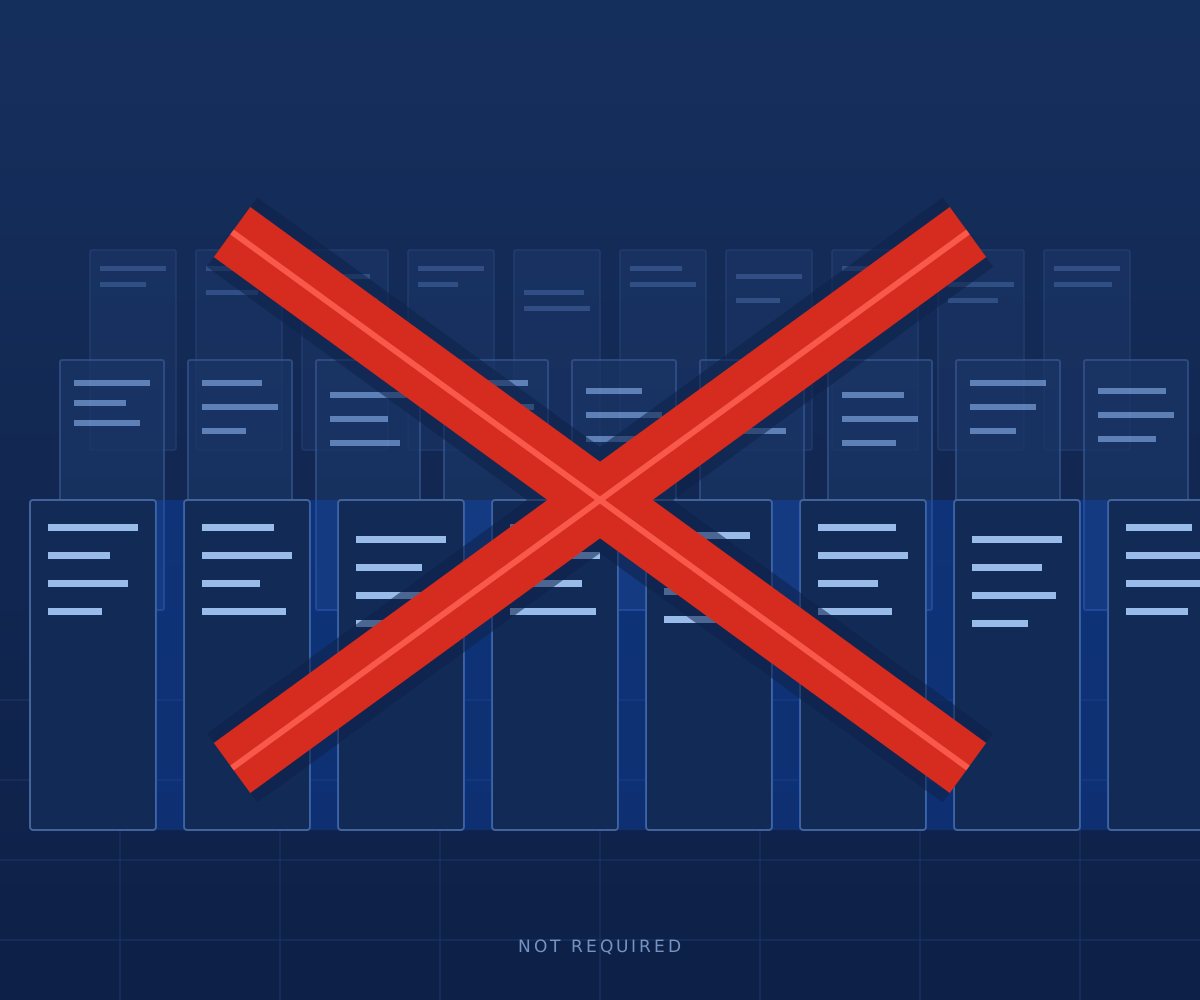
A data center struck through with a red X. New Sapience requires none.

A sapiens has no per-query cost to multiply

Google is the only frontier lab that has published what a single prompt costs to answer. Drag the volume and watch its own number climb. One of these columns cannot.

Prompts answered
1,000,000per day
11K1M2.5B
Everyone else

Priced at Google’s own published cost of 0.24 Wh, 0.26 mL and 0.03 g per prompt.

Electricity
Water
Emissions
A sapiens

Runs on the device already in the room. No cost per query, at any volume.

Electricity0
Water0
Emissions0

Per-prompt cost: Google, “Measuring the environmental impact of AI inference,” 21 August 2025 — median Gemini Apps text prompt. Volume ceiling: OpenAI told Axios in July 2025 that ChatGPT answers 2.5 billion prompts a day, and has published nothing since. Neither OpenAI nor Anthropic discloses a per-prompt figure of its own, so Google’s is the only one available to apply. Household equivalence at 29 kWh per day, the US residential average per EIA. A sapiens draws only the power of the host device, which runs whether it is asked a question or not.

The industry is restarting nuclear reactors

None of the figures below are ours. Each one is published by the company or the agency named beside it.

81%Google emissions, 2025 against its 2019 baseline

Google is further from net zero than the year it promised to get there.

Its carbon footprint rose 18 per cent in 2025 alone, the largest annual increase it has ever reported, while electricity use climbed 37 per cent. Google is the most efficient hyperscale operator in the world and it is moving backwards.

Google 2026 Environmental Report
62%Microsoft emissions, FY2025 against FY2020

Microsoft pledged to be carbon negative by 2030 and has gone the other way.

21,121,000 tonnes of CO₂ equivalent in fiscal 2025, against 13,061,000 in fiscal 2020, the year of the pledge. Scope 2 emissions, the power the datacenters actually draw, grew almost ten-fold to 13 per cent of the total.

Microsoft 2026 Environmental Data Fact Sheet
835Megawatts of nuclear, one buyer, twenty years

A reactor shut down in 2019 is being brought back to serve one company’s data centers.

Three Mile Island Unit 1 is under NRC review for a 2027 restart as the Crane Clean Energy Center, its full output contracted to Microsoft under a twenty-year agreement. This is no longer a forecast about future demand. It is a decommissioned reactor being reversed.

Constellation Energy; US Nuclear Regulatory Commission
5MGallons of water a day, single facility

One large data center can drink what a town of fifty thousand people drinks.

Up to five million gallons a day for cooling, roughly 1.8 billion a year. Across the United States, data centers were already consuming 449 million gallons a day on 2021 figures, before the current buildout began.

Environmental and Energy Study Institute

Every number on this page belongs to somebody else. We publish no lifecycle assessment and no carbon accounting of our own, because a sapiens has never had the footprint that would require one.

PJM Interconnection

The bill is already on other people's accounts

PJM is the largest grid operator in the United States, serving thirteen states. Its capacity prices are what generators are paid simply to be available, and they flow through to every customer in the region.

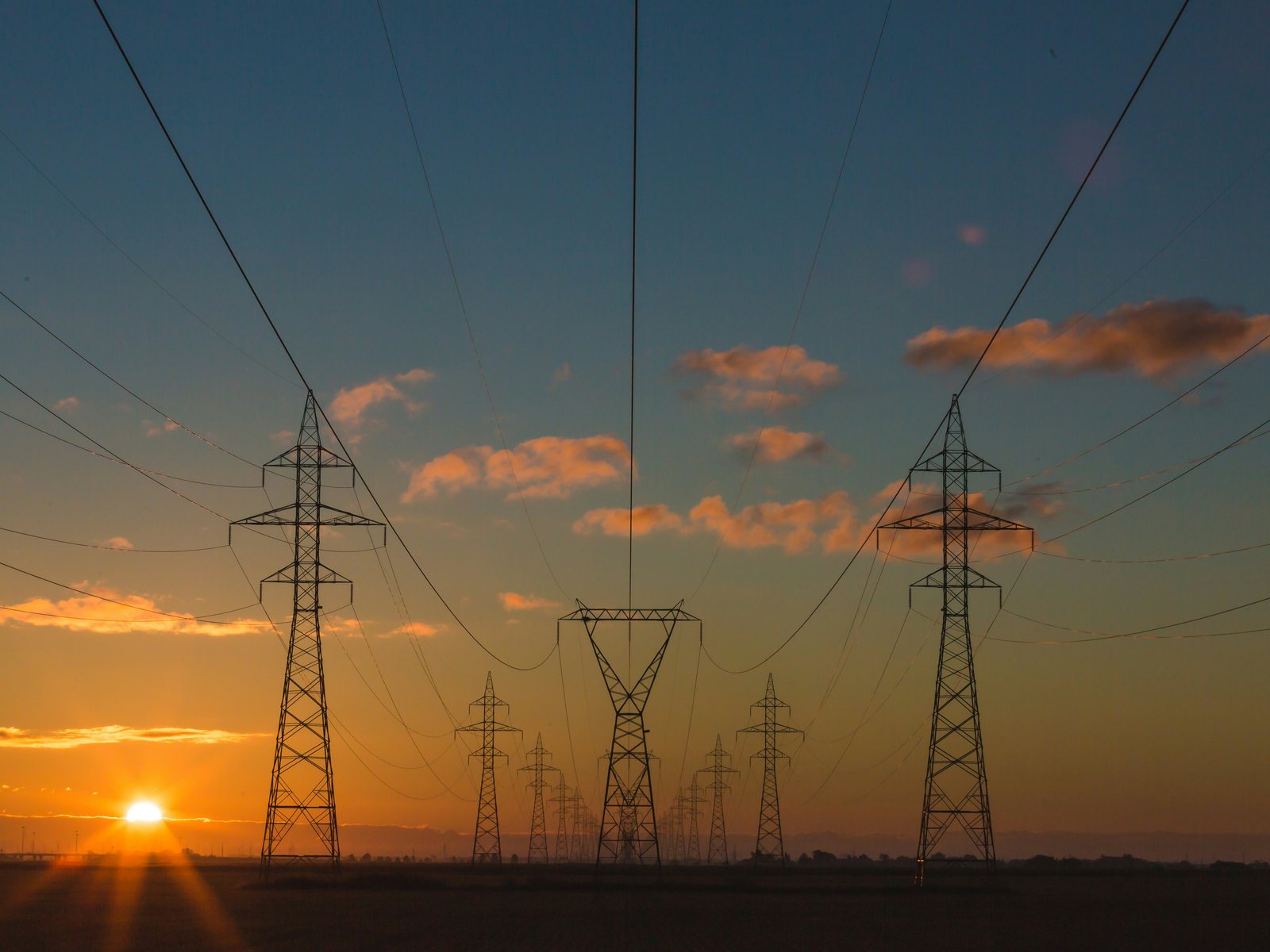
High-voltage transmission infrastructure.
Capacity market

Prices rose eleven-fold in two years

$28.92 → $329.17PJM capacity price per MW-day, 2024/25 to 2026/27

The intermediate year cleared at $269.92. Capacity prices are what generators are paid simply to be available, and they flow through to every customer in the footprint.

PJM capacity auction results
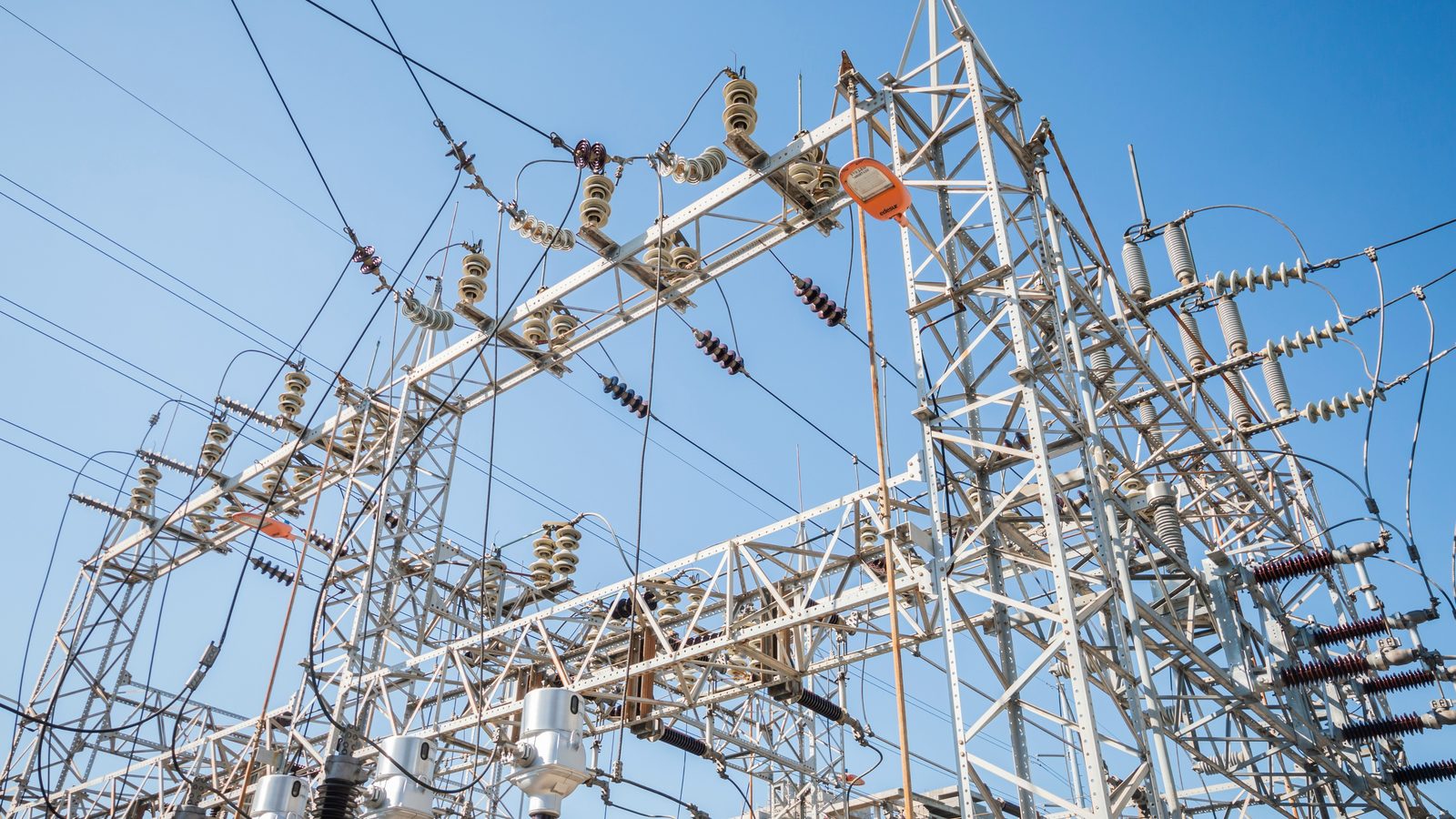
Electrical substation at dusk.
Attribution

Most of the increase traces to data centers

63%of the 2025/26 capacity price increase

Roughly $9.3 billion recovered from customers across the PJM footprint in a single delivery year, according to analysis of the auction results.

Institute for Energy Economics and Financial Analysis
Residential distribution infrastructure.
Household impact

It arrives as a line on a household bill

$21 a monthadded in Pepco's District of Columbia territory

Roughly $18 a month in western Maryland and $16 in Ohio. Residential rates across affected territories are projected to rise 15 to 40 per cent by 2030.

Utility rate filings; ICF projections

Why a sapiens costs almost nothing to run

Three decisions, none of them made for energy reasons, all with the same consequence.

Decision

Knowledge is engineered, not trained

A sapiens holds knowledge as a structured model of interconnected concepts, encoded directly. There is no corpus to ingest, no gradient descent, no cluster running for weeks.

The single largest energy line item in mainstream AI is one this architecture does not have.
Decision

Reasoning happens on the device

A sapiens runs on a mobile device processor. No round trip to a data center, no GPU cluster serving inference, no network transit per query.

Chosen for security and latency in air-gapped environments. Low power draw is the same decision viewed from another angle.
Consequence

Determinism removes the rework

Identical inputs produce identical outputs. No sampling, no repeated generation to find an acceptable answer, no verification pass to catch what the model invented.

Work that never has to be repeated is work that never has to be powered.

Same job. Different physics.

Grid and reactor operations are two of the mission-critical sectors this platform serves. The operators who most need automation are being sold systems that require the very capacity they are struggling to balance.

CharacteristicMainstream AISapiens
Deployment targetData center clusterSingle edge device
Training corpus requiredWeb-scaleNone — curated world model
Network dependencyContinuous connectivityNone — air-gap capable
Cooling water footprintAttributable share of facility drawNone beyond the host device
Cost profileMetered, vendor-setFixed at deployment
Retraining cyclePeriodic, full-clusterModel is edited, not retrained

Built for the parts of the grid that cannot fail.

The same architecture that removes the data center is the one that makes a system deployable in a control room. Efficiency is not a separate product line. It is what the rest of the platform already is.

See it run against your own instrument data

Request a demo